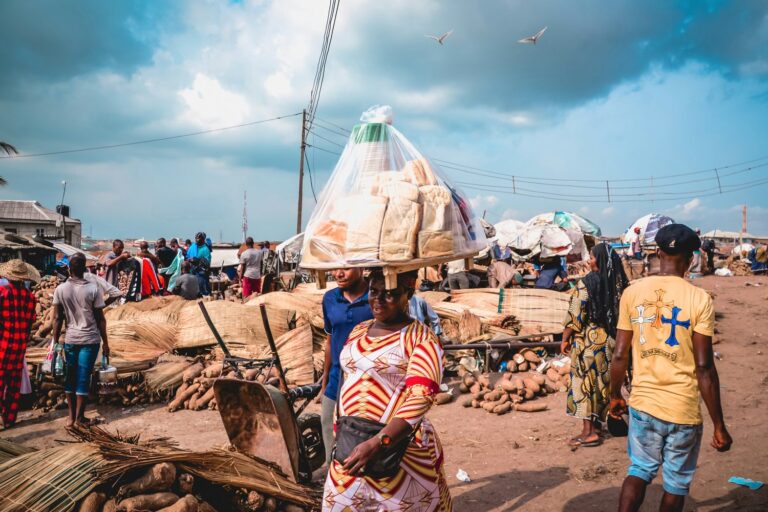
Resilience has become one of the most admired words in development.
Communities are praised for their resilience after disasters. Entrepreneurs are celebrated for building businesses despite difficult conditions. Workers are admired for finding ways to earn an income when formal employment is scarce. Small firms are described as innovative because they continue operating through electricity shortages, unreliable logistics, unstable currencies, regulatory uncertainty and weak public services.
There is good reason for this admiration. The ability to adapt is genuinely valuable. People who can improvise under pressure, reorganise resources quickly and continue functioning when systems fail possess capabilities that matter greatly in uncertain environments.
But resilience can also conceal a development failure.
The problem begins when we stop asking why so much resilience is necessary.
Consider a small business that experiences frequent electricity interruptions. The owner buys a generator, installs an inverter, purchases batteries and perhaps adds solar panels. Fuel costs rise. Equipment has to be maintained. Someone must monitor the different power sources and switch between them when necessary.
The business survives.
We call the entrepreneur resilient.
But what exactly has happened economically?
Capital that could have been invested in new equipment, additional employees, product development or expansion has instead been spent recreating electricity infrastructure privately.
Now imagine this occurring not in one business, but across thousands of firms.
The individual response may be rational. The collective outcome is deeply inefficient.
The same pattern appears elsewhere. A company cannot rely on a single internet provider, so it maintains multiple connections. A retailer cannot trust one payment channel, so several payment methods are kept available. Businesses maintain paper records alongside digital systems because technology infrastructure may fail. Entrepreneurs rely on personal networks because formal dispute-resolution mechanisms are slow. Families purchase private security because public safety is uncertain. Households provide their own water because municipal supply is unreliable.
Each workaround allows life to continue.
Together, they impose an enormous hidden cost.
The Economy of Workarounds
Much of economic activity in developing countries operates through what might be called an economy of workarounds.
People do not simply use the systems available to them. They build additional systems around those systems.
The official payment system exists, but businesses maintain cash alternatives.
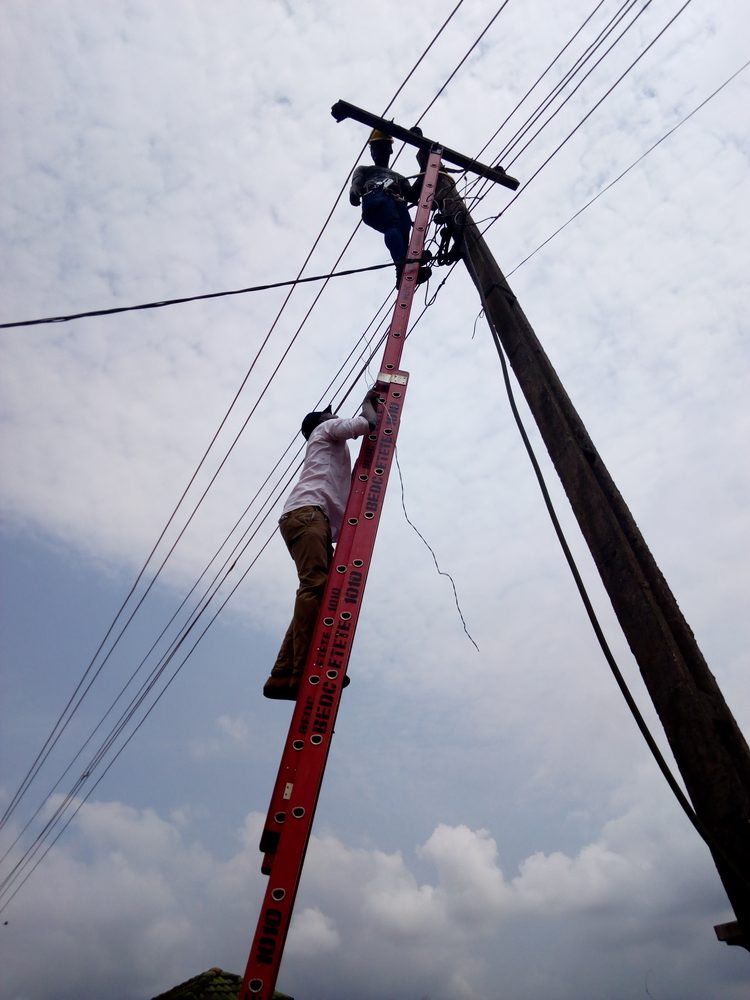
The public electricity network exists, but households and firms create private power systems.
Formal financial institutions exist, but people rely on rotating savings groups, family lending and informal credit.
Government institutions exist, but citizens use personal relationships to navigate them.
Public transport exists, but people develop informal mobility arrangements because official systems do not adequately meet demand.
These practices demonstrate extraordinary adaptability. They also reveal something fundamental about institutional weakness.
When formal systems cannot be relied upon, individuals internalise the cost of uncertainty.
The business owner becomes an infrastructure provider.
The household becomes a utility company.
The entrepreneur becomes a risk manager.
The worker becomes his or her own social insurance system.
The citizen becomes an expert in navigating institutional unpredictability.
This is where resilience becomes economically expensive.
The cost is not limited to money. It includes time, attention and cognitive effort.
A business owner who spends several hours each week dealing with electricity, payments, administrative delays and logistics problems has fewer hours available for customers, strategy, staff development or innovation. A worker managing several income sources because none is sufficiently secure has less time for rest, training or family life. A household constantly planning around service failures carries a burden that does not appear in conventional measures of economic productivity.
Much of this labour is invisible.
Yet it shapes development profoundly.
We Often Mistake Adaptation for Progress
One of the dangers of celebrating resilience is that adaptation can easily be mistaken for transformation.
Suppose businesses in a city increasingly adopt solar power because the electricity grid is unreliable. Solar adoption rises. New businesses emerge to install panels and batteries. Entrepreneurs develop innovative financing models. Technology spreads.
From one perspective, this is an encouraging story of innovation.
And it is.
But there is another question.
Why did firms have to make this investment in the first place?
If a significant proportion of business capital is being redirected towards privately reproducing basic infrastructure, then technological adaptation may coexist with a deeper structural problem.
The same is true of digital technology.
In my research on businesses operating in environments characterised by infrastructural fragility, one recurring feature is not simply digital adoption but the construction of redundancy. Businesses maintain alternatives because they cannot assume that any individual system will always work. Digital processes coexist with manual ones. Multiple payment channels are maintained. Communication moves between platforms. Workers improvise when technology fails.
This is often highly sophisticated behaviour.
But sophistication should not be confused with efficiency.
A firm that has learned to operate under permanent uncertainty may be extremely capable at survival while remaining less productive than it could have been in a more reliable environment.
That distinction matters.
Survival capability and productive capability are not the same thing.
The first enables an organisation to continue functioning despite disruption.
The second enables it to create more value from the resources it possesses.
Developing economies need both. But when too much organisational capability is devoted to survival, too little may remain for growth.
Resilience Can Become a Tax on Ambition
This hidden cost is particularly significant for small firms.
Large companies can absorb uncertainty more easily. They can purchase generators, hire compliance specialists, maintain legal departments, diversify suppliers and create sophisticated risk-management systems.
Small businesses have fewer resources.
For them, every workaround competes directly with another possible investment.
The money spent on backup power might have purchased a new machine.
The employee assigned to navigate an administrative process might have been developing new customers.
The funds held in reserve to deal with unexpected disruptions might otherwise have financed expansion.
This creates what we might think of as a resilience tax.
It is not collected formally by the state, but it is paid continuously by firms operating in uncertain environments.
And unlike normal taxation, the resilience tax does not necessarily fund a public service in return.
It simply pays for the ability to continue operating.
Over time, this can change the ambitions of businesses themselves.
Entrepreneurs who operate in highly uncertain environments may become reluctant to expand even when demand exists. Growth creates exposure. More employees mean larger payroll obligations. Larger premises create higher fixed costs. More equipment creates greater dependence on infrastructure. Formalisation may create additional administrative responsibilities.
Remaining small can therefore become a rational risk-management strategy.
This is important because development policy often assumes that small firms remain small primarily because they lack finance, training or entrepreneurial ambition.
Sometimes they do.
But sometimes firms remain small because the environment makes growth unusually risky.
If that is the case, providing entrepreneurship training without addressing the wider environment will have limited effect.
You cannot train uncertainty out of an economy.
The Problem With Romanticising Hustle
There is also a cultural dimension to this discussion.
Across many developing economies, especially those with large youthful populations, considerable admiration surrounds the figure of the hustler.
The hustler creates opportunities where none appear to exist. He works several jobs. She builds a business from almost nothing. People learn skills online, trade through social media, deliver services at night and find increasingly inventive ways to earn income.
There is something admirable in this.
But the language of hustle can become dangerous when it turns structural problems into individual tests of character.
If unemployment is widespread, the young person is told to become entrepreneurial.
If wages are low, workers are encouraged to develop another income stream.
If public services are inadequate, households are expected to make private arrangements.
If the economy provides insufficient security, resilience becomes the answer.
The underlying message is subtle: successful people are those who cope.
This shifts attention away from an important political question.
What should people reasonably be expected to cope with?
There will always be uncertainty in economic life. Businesses fail. Technologies change. Industries disappear. Markets fluctuate. Individuals need adaptability.
But there is a difference between resilience in response to unavoidable uncertainty and resilience in response to avoidable institutional failure.
A farmer should perhaps be resilient to changing market conditions.
Should the farmer also have to be resilient to roads that make it impossible to transport produce?
A technology business should adapt to competitive change.
Should it also have to build its own reliable electricity system?
A worker should develop new skills as industries evolve.
Should that worker also need several jobs because none provides sufficient economic security?
At some point, celebrating resilience becomes a way of lowering expectations of institutions.
Resilience Has a Political Economy
The idea of resilience also raises an uncomfortable question about who carries the cost of failure.
When infrastructure is weak, individuals compensate.
When social protection is limited, families compensate.
When formal finance is inaccessible, communities compensate.
When public institutions do not function reliably, private networks compensate.
The system continues operating because citizens absorb its weaknesses.
This can create a peculiar political equilibrium.
Institutional failure does not always produce immediate collapse because people are extraordinarily good at adapting to it.
Ironically, their resilience can reduce the pressure for reform.
A city with unreliable electricity does not stop functioning because businesses buy generators.
A weak transport system does not immobilise the population because informal transport emerges.
Limited social protection does not necessarily result in immediate destitution because families and communities redistribute resources.
These arrangements soften the consequences of weak institutions.
But they can also make those weaknesses persist.
People build parallel systems rather than waiting for formal ones to improve.
Over time, society becomes highly capable of living around the state.
That is not necessarily the same as development.
From Resilient People to Resilient Systems
The policy objective should therefore change.
Governments should not aspire merely to produce resilient citizens and businesses.
They should build resilient systems.
The distinction is important.
A resilient business survives because its owner maintains several backup systems.
A resilient electricity network continues functioning because redundancy is built into the infrastructure itself.
A resilient worker survives unemployment because family members provide financial support.
A resilient social-protection system allows workers to withstand periods of unemployment without falling into poverty.
In the first case, resilience is privatised.
In the second, resilience is institutionalised.
Development should progressively move resilience from the individual towards the system.
This does not mean eliminating personal responsibility or entrepreneurial adaptation. It means designing institutions so that individuals do not have to recreate essential systems for themselves.
Reliable public infrastructure allows businesses to focus on business.
Effective financial institutions allow entrepreneurs to invest rather than constantly manage liquidity risks.
Functional social protection allows workers to take productive risks without a single setback becoming catastrophic.
Predictable regulation allows firms to plan.
Efficient public administration reduces the time citizens spend navigating government.
The result is not a society without resilience.
It is a society in which resilience can be directed towards innovation rather than survival.
Productivity Begins With Reducing Friction
This suggests a different way of thinking about productivity in developing economies.
Much policy attention focuses on how to make workers and businesses more productive through education, skills, technology and finance.
All of these matter.
But productivity can also rise by reducing the amount of effort wasted overcoming unnecessary friction.
A road that allows goods to reach markets faster improves productivity.
Reliable electricity improves productivity.
A payment system that rarely fails improves productivity.
An administrative process that takes ten minutes rather than two days improves productivity.
A functioning court that makes contracts credible improves productivity.
These improvements may appear mundane compared with artificial intelligence strategies or high-profile innovation programmes.
But they change what people can do with their time and capital.
Development is partly the process of making ordinary economic activity less difficult.
This is why the quality of institutions matters so much.
Good institutions allow individuals to rely on systems beyond themselves.
Trustworthy infrastructure allows firms to specialise.
Predictable rules allow people to make longer-term investments.
Reliable public services reduce the need for private substitutes.
When these things improve, economic actors can redirect energy away from coping and towards creating.
That is when resilience becomes genuinely productive.
The Goal Should Be Ordinary Reliability
There is a temptation in development to search constantly for exceptional solutions.
We celebrate disruptive technologies, heroic entrepreneurs, transformative leaders and ingenious workarounds.
But one of the greatest achievements a developing country can produce is far less dramatic.
Ordinary reliability.
Electricity that works.
Water that flows.
Payments that clear.
Roads that can be used.
Government systems that respond.
Contracts that mean something.
Schools that teach.
Health systems that function.
These are not glamorous achievements. Yet they are the foundations upon which more ambitious forms of innovation become possible.
The purpose of development should not be to create societies populated by people who have become exceptionally skilled at surviving institutional failure.
It should be to create societies in which ordinary people can direct more of their intelligence, energy and capital towards building better lives.
Resilience will always matter.
Businesses will still face shocks. Workers will still encounter change. Countries will still confront crises.
But resilience should be something societies draw upon when exceptional circumstances arise.
It should not be the operating system of everyday life.
A country that constantly praises the resilience of its citizens should eventually ask a more difficult question:
Why do they need so much of it?