Many Nigerian sources of livelihood become digital long before they become formal. In my research with digital workers and small businesses in Nigeria, I met people who ran much of their economic lives from their phones.
They advertised on Instagram. They negotiated with customers on WhatsApp. They received bank transfers, arranged deliveries through apps and worked for clients they had never met. Some earned money from companies outside Nigeria.
Their work was digital. Their businesses were visible to banks, platforms and payment companies. Yet many still had no pension, insurance, affordable credit or effective protection when something went wrong.
This captures an important change in Nigeria’s economy. Informality is not disappearing. It is becoming digital.
That distinction matters because policymakers often assume that greater use of technology will naturally move workers and businesses into the formal economy. Digital payments create records. Platforms connect people to customers. Online tools can reduce the cost of starting a business.
But a digital transaction is not the same as a formal job. An Instagram page is not the same as a registered and protected business. A bank transfer does not guarantee income security.
Technology can make economic activity more visible without making it more secure.
The Digital Informal Economy: Opportunities and Blind Spots
Informality is not a minor part of Nigeria’s economy. It is where most Nigerians earn a living.
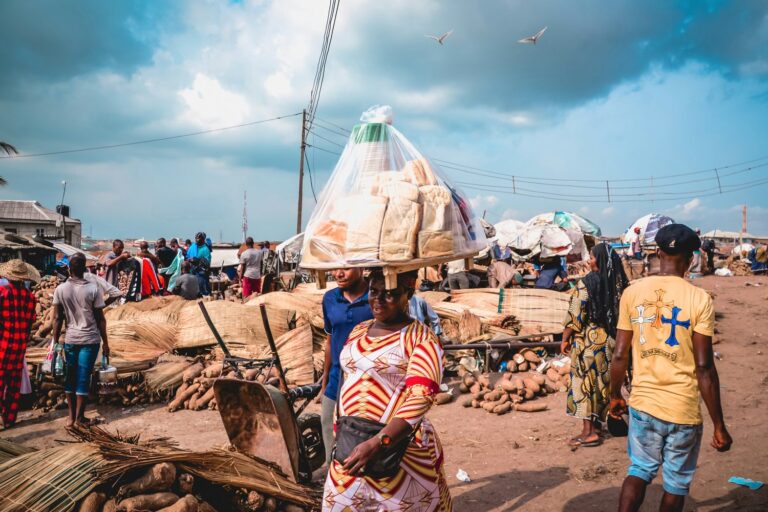
According to the National Bureau of Statistics, 93 per cent of employment was informal in the second quarter of 2024. It also reported that 85.6 per cent of employed Nigerians were self-employed.
These figures reflect a labour market built around traders, artisans, freelancers, transport workers, small businesses and people combining several income sources. Digital technology is now changing how these people operate.
A fashion seller may have no physical shop but serve customers in several states. A graphic designer may find all her clients online. A software developer may work from Enugu for a company in Britain. A ride-hailing driver may appear self-employed, while an app determines his customers, fares and continued access to work.
All these people may be classified as informal or self-employed. Yet their working arrangements are very different. Some control their prices and choose their customers. Others depend heavily on platforms that can change charges, reduce their visibility or suspend their accounts without warning.
Digitalisation has not removed informality. It has given it new forms.
The strange feature of this new economy is that workers can be highly visible to private companies but almost invisible to public policy.
A platform may know how many hours a driver works, where he travels, how customers rate him and how much he earns. A payment company may have a detailed record of a trader’s transactions. Social-media companies may know which products attract customers.
Yet the worker may still have no access to social protection, reliable credit or simple dispute resolution.
This creates a new type of informality. It is data-rich but institutionally weak.
The same problem applies to small businesses. Digital payments can produce a transaction history, but that history does not always help the owner obtain affordable finance. Social media can generate customers, but it offers little protection when a buyer refuses to pay or a platform restricts an account.
The business has become easier to see. It has not necessarily become easier to support.
Building Better Policy
Government often presents formalisation as a duty. Register the business. Keep records. Pay the correct taxes. Comply with regulations.
These responsibilities matter. But formalisation cannot be sustained through obligations alone.
For many small businesses, the immediate benefits are unclear. Registration may bring new costs and administrative demands, while access to finance, insurance and government support remains uncertain.
That is why formalisation should be treated as a bargain.
Government asks businesses to become more visible and accountable. In return, those businesses should gain something valuable: easier access to credit, legal protection, insurance, export support, public procurement opportunities or simpler ways to resolve disputes.
Without that bargain, digitalisation may simply make informal workers easier to tax without making their lives more secure.
The first experience of formalisation should not be a demand for payment. It should be access to something useful.
Public policy often divides businesses into two groups: formal and informal. Reality is more complicated.
A business may be registered but keep poor financial records. A freelancer may earn foreign currency without having a company. A trader may use digital payments but mix household and business income. Someone may have a salaried job during the week and run an online business at weekends.
People move between different levels of formality. Nigeria therefore needs a ladder of formalisation rather than a single switch.
The first step could be a simple business identity and access to basic record-keeping tools. The next could offer affordable insurance or credit linked to verified business activity. Further steps could open access to procurement, export assistance and larger financial products.
Each stage should provide a clear benefit. This approach would be more realistic than expecting every microbusiness to adopt the same structures as a large company.
Social protection must also reflect the realities of informal work. Traditional systems are often designed around regular salaries and stable employers. That model does not fit much of Nigeria’s workforce.
A freelancer may earn well in one month and very little in the next. A trader’s income may rise during festive periods and fall afterwards. A platform worker may move between several apps and other forms of work.
Contribution systems must reflect this reality. Workers should be able to make flexible payments into pensions, health insurance and other protection schemes. Benefits should remain with the individual when they change jobs, platforms or business activities.
A person should not lose protection simply because their work does not fit a conventional employment relationship.
Digital systems can make flexible and portable contributions easier. But the design must begin with the realities of workers’ lives, not with assumptions borrowed from formal salaried employment.
Digitally enabled workers and businesses also need faster ways to resolve disputes.
A platform may suspend a worker’s account. A payment may fail. A customer may refuse to pay after receiving a service. A seller may lose access to a social-media account on which the business depends.
For a large company, such problems may be manageable. For a small trader or freelancer, they can destroy an entire source of income.
Nigeria needs simple and affordable mechanisms for resolving disputes involving platforms, payments and digitally delivered services. Workers and small businesses should not be left entirely at the mercy of private systems whose decisions they may struggle to challenge.
Government also needs a better way of judging whether digitalisation and formalisation are improving people’s lives.
Counting registered businesses is not enough. Neither is counting digital accounts, training participants or loans announced.
The real questions are more demanding. Are businesses surviving? Are their revenues growing? Are they employing more people? Do they have better access to credit? Are workers gaining insurance and social protection? Are digital tools improving productivity?
A programme that registers thousands of businesses but does not improve their prospects has achieved an administrative output, not an economic transformation.
This requires government agencies to work together. Business registration, taxation, identity, employment, finance and social protection are often treated as separate issues. For workers and business owners, they are parts of the same economic life.
They should not have to navigate a series of disconnected institutions.
Digitalisation can help Nigeria build a more productive economy. It can expand markets, reduce transaction costs and help people demonstrate their economic activity.
But technology cannot, on its own, create trust, protection or economic security.
A worker does not become protected because an app records his location. A trader does not become financially included because customers pay into her bank account. A business does not become productive because it has an Instagram page.
Institutions still matter.
The informal economy is not disappearing into the digital economy. It is being rebuilt inside it.
Nigeria’s task is not simply to make informal activity easier to see. It is to ensure that greater visibility produces real value: better finance, stronger protection, higher productivity and more secure livelihoods.
Digitalisation can make informal work visible. Only good policy can make it work better for the people who depend on it.