For decades, development thinking has carried an implicit picture of how economies are supposed to evolve. Poor countries begin with large agricultural and informal sectors. As they industrialise, businesses become larger, workers move into regular wage employment, governments develop stronger administrative systems, and economic activity gradually becomes formal. Informality, in this understanding, is a transitional condition. It belongs to an earlier stage of development and should diminish as countries become richer.
There is some historical basis for this view. But it has become increasingly difficult to reconcile with the economic reality of much of the developing world.
Informality has proved remarkably persistent. In 2025, 57.9 per cent of the world’s employed population remained in informal employment. In least developed countries, the figure was 88.6 per cent, while in Sub-Saharan Africa it stood at 87.6 per cent. These are not marginal groups sitting at the edges of otherwise formal economies. In many countries, informal work is the economy experienced by the overwhelming majority of citizens.
This should force us to reconsider the way we think about informality.
If something employs nearly nine out of every ten workers in parts of the world, can it really be understood primarily as a deviation from the normal economy? Or does its persistence tell us something much more important about how economic life is actually organised?
The distinction matters because governments frequently approach informality as a problem of compliance. Businesses need to register. Workers need to enter recognised employment relationships. Enterprises need to pay taxes. Transactions need to become visible. Property needs to be documented. Economic activity needs to move from outside the state into systems that the state can recognise and regulate.
There are good reasons for wanting many of these things. Informal workers frequently lack social protection, employment rights and predictable incomes. Informal businesses can struggle to obtain finance, enforce contracts or participate in larger supply chains. Governments find it harder to collect revenue from economic activities they cannot see. The World Bank’s recent work on employment in Sub-Saharan Africa similarly emphasises that the challenge is not merely generating work, but improving its quality, with wage-paying employment accounting for only a minority of jobs.
But identifying the disadvantages of informality does not mean that formalisation is simply a matter of moving people from one category into another.
The more important question is why so many people remain informal in the first place.
Informality Is Often Rational
A small business owner who chooses not to register a business is frequently described as operating outside the formal economy. This description tells us what the entrepreneur has not done, but tells us very little about why.
Consider the decision from the entrepreneur’s perspective.
Registration may involve money, time and administrative processes. Formalisation may expose the business to taxes, inspections or regulatory obligations. Maintaining records may impose additional costs. Compliance may require professional services the entrepreneur previously did not need.
What does the business receive in return?
If registration provides reliable access to credit, enforceable contracts, government procurement opportunities, affordable insurance, useful business services, infrastructure and credible legal protection, then formalisation may be economically attractive.
But suppose registration produces little beyond an additional set of obligations. Electricity remains unreliable. Finance remains inaccessible. Government contracts remain difficult to obtain. Courts remain slow. Security remains something businesses provide for themselves. Regulatory agencies become more visible to the entrepreneur than supportive institutions.
Under those circumstances, remaining informal may not reflect ignorance or resistance to development. It may be a rational response to the institutional environment.
This is an uncomfortable proposition because it changes where we locate the problem.
Instead of asking only, Why will this entrepreneur not formalise?, we must also ask, What has the formal economy offered that makes formalisation worthwhile?
That is a very different development question.
It shifts attention from the behaviour of individuals towards the relationship between citizens, businesses and institutions.
The same logic applies to workers. A worker may prefer an informal arrangement because formal employment is unavailable. But some workers may also value aspects of informal work that conventional employment does not easily provide: flexibility, autonomy, the ability to combine different income streams, control over working time, or the possibility of moving between activities as opportunities change.
This does not mean that informal work is necessarily good work. Far from it. Informality is frequently associated with insecurity, low earnings, limited bargaining power and inadequate social protection. But recognising these disadvantages does not require us to assume that every informal worker’s preferred destination is a conventional employment contract.
The question should be what kinds of economic security, protection and opportunity people need, rather than which administrative category policymakers would prefer them to occupy.
The Informal Economy Is More Sophisticated Than It Looks
One reason informality is misunderstood is that it is too often associated with economic primitiveness.
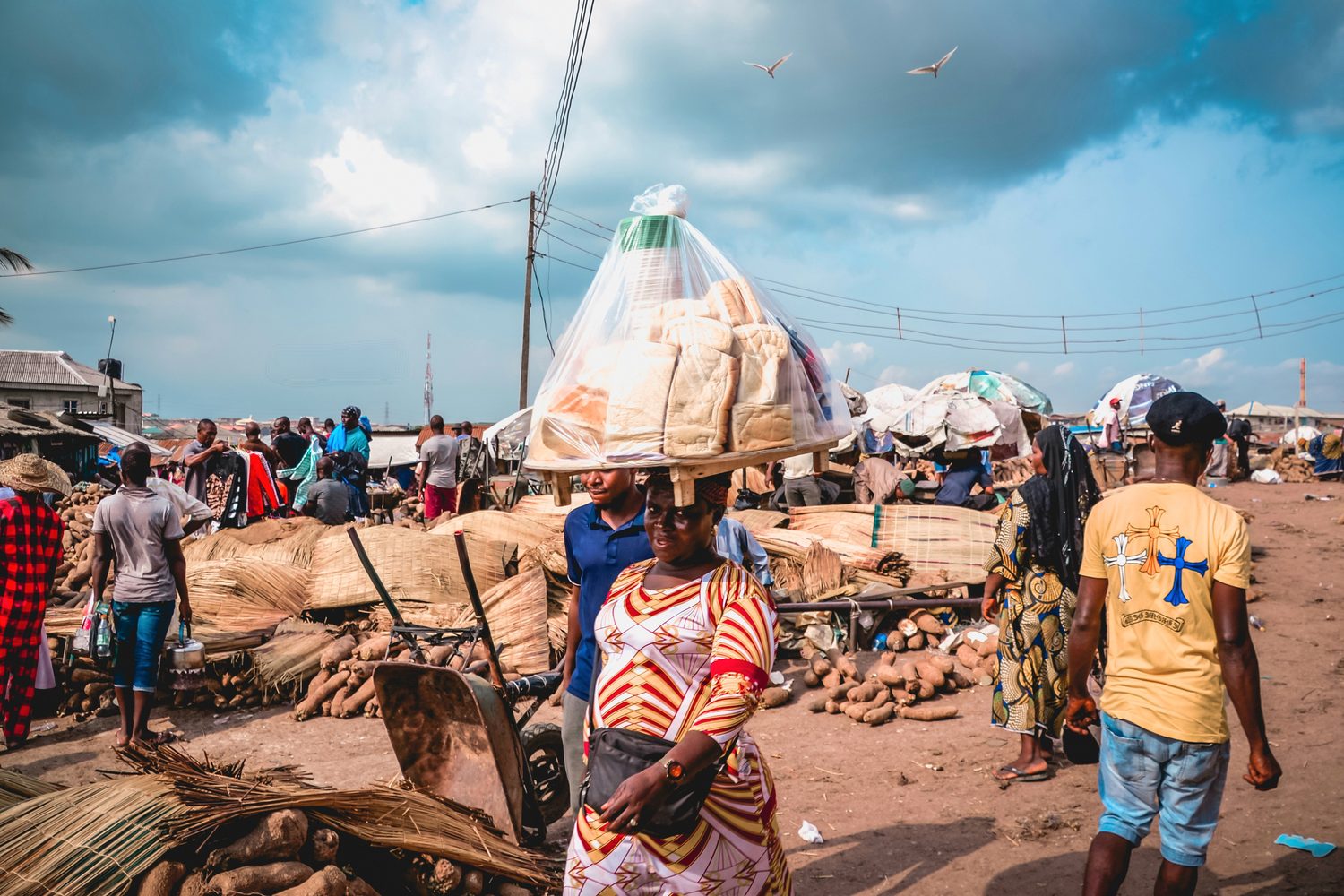
Yet walk through markets, transport systems, repair economies, construction sites, digital marketplaces or neighbourhood commercial districts in many developing countries and a different picture emerges. There are sophisticated systems of credit, reputation, apprenticeship, trust, subcontracting, distribution and dispute resolution operating without many of the institutions normally associated with formal firms.
These systems are not always efficient or fair. But neither are they random.
An informal trader may obtain inventory from a supplier who extends credit because of a relationship developed over many years. An artisan may train apprentices through arrangements governed more by social obligation than written contracts. A transport operator may participate in an association that performs some functions usually associated with formal institutions. Small businesses may rely on community networks to verify customers, recover debts and identify trustworthy employees.
Increasingly, digital technology is becoming intertwined with these arrangements.
A business may be informal in its legal status but use bank transfers, digital payments, WhatsApp, Instagram, cloud applications and online marketplaces. A trader may have no sophisticated accounting system but maintain extensive digital records of transactions and customers. A freelancer may operate without a registered company while selling highly specialised professional services to clients thousands of miles away.
The old boundary between the formal, modern economy and the informal, traditional economy therefore becomes difficult to sustain.
Developing economies increasingly contain technologically sophisticated informality.
That matters for how we think about digital transformation. Technology does not necessarily move people automatically from informality into formality. In many cases, it makes informal economic activity more efficient.
Mobile phones allow traders to coordinate supplies. Digital payments make transactions easier. Social media creates markets for businesses that may never rent conventional commercial premises. Platforms connect independent workers directly with customers. Digital finance provides new ways of saving, borrowing and transferring money.
The informal economy can therefore become more digital without becoming substantially more formal.
This is one of the important contradictions at the heart of contemporary development.
Technology can modernise the mechanisms through which people participate in an economy while leaving the institutional relationship between those people and the state largely unchanged.
Formalisation Should Not Mean Making Survival More Expensive
There is another reason policymakers should approach formalisation carefully.
A poorly designed formalisation programme can destroy precisely the economic activity it is intended to improve.
Imagine a woman operating a small food business with two employees. Her margins are narrow. She faces fluctuating input prices, unreliable electricity and uncertain demand. She nevertheless provides herself and two other people with livelihoods.
Government decides that businesses such as hers should become formal.
The intention may be entirely reasonable. Registration can improve statistics, expand the tax base and potentially provide workers with greater protection. But suppose formalisation introduces several new fees, taxes, reporting obligations and compliance costs without significantly improving the conditions under which the business operates.
The business has technically become more formal but economically more fragile.
If the additional costs become unsustainable, she may reduce employment, raise prices, retreat back into informality or close completely.
Nothing meaningful has been gained.
This is why governments should distinguish between administrative formalisation and productive formalisation.
Administrative formalisation occurs when economic activity becomes registered, documented and taxable.
Productive formalisation occurs when becoming visible to the state also improves the productive capacity of the enterprise or the economic security of the worker.
The second should be the objective.
Registration should open doors rather than merely create obligations.
A formally recognised small business should find it easier to establish an economic identity, build a credit history, access finance, insure its operations, participate in procurement, enforce contracts and interact with government agencies. A worker entering a more formal arrangement should gain meaningful protection against risks such as illness, injury, unemployment and old age.
Formalisation becomes sustainable when the benefits of visibility exceed its costs.
This suggests that governments need to stop thinking about informality principally as a tax collection problem.
It is an institutional design problem.
Not Every Informal Enterprise Wants to Become a Corporation
There is also a tendency to imagine every microenterprise as an undeveloped version of a large company.
Give the street trader training, credit and registration, the argument sometimes implies, and eventually the enterprise may grow into a substantial employer.
Some will.
Many will not.
This is not necessarily a policy failure.
People establish small economic activities for very different reasons. Some entrepreneurs pursue growth. Others seek independence. Some businesses supplement household income. Others exist because the owner could not find suitable wage employment. Some are seasonal. Some operate around caring responsibilities. Some owners are highly ambitious but structurally constrained. Others have no desire to employ dozens of people.
Development policy becomes distorted when all of these people are placed into a single category called “entrepreneurs” and subjected to the same intervention.
Training alone will not turn every microenterprise into a growth firm. Credit alone will not solve every productivity constraint. Registration alone will not transform businesses whose markets are too small to sustain expansion.
The objective should therefore not be to make every informal business large. It should be to create pathways through which enterprises capable of becoming more productive are able to do so, while improving economic security for those whose businesses remain small.
That requires understanding differences within the informal economy rather than treating it as a single undifferentiated sector.
The market trader, motorcycle mechanic, digital freelancer, subsistence farmer, construction worker, ride-hailing driver and technology entrepreneur may all be classified as informal under particular definitions. Their economic circumstances, capabilities and policy needs are nevertheless profoundly different.
One policy cannot solve all forms of informality.
Digitalisation Creates a New Opportunity
This is where digital transformation creates an important opportunity for developing countries.
For much of modern history, formalisation required businesses and citizens to navigate physical bureaucracies. They completed forms, travelled to government offices, maintained paper records and interacted with multiple agencies that often possessed little ability to share information.
Digital public infrastructure can potentially change this relationship.
Digital identity can make it easier to establish who a person or business is. Interoperable payment systems can create usable transaction histories. Digital business registration can reduce administrative costs. Electronic tax systems can simplify compliance. Digital procurement platforms can allow smaller businesses to discover government opportunities. Properly designed social-protection systems can extend coverage to workers whose employment does not fit traditional employer-employee relationships.
The potential is considerable.
But the same principle from the wider digital-development debate applies here: digitising an institution does not automatically make the institution effective.
If digital registration simply makes it easier for government to identify businesses that it can tax, while access to credit, infrastructure and public services remains unchanged, technology may strengthen extraction without strengthening capability.
That can deepen distrust.
The design question is therefore crucial. Digitalisation should reduce the cost of participating in the formal economy, not merely increase the state’s capacity to observe it.
Governments should be asking how data already generated through everyday economic activity can help citizens and enterprises obtain something valuable in return.
Could a small trader’s digital transaction history help establish creditworthiness?
Could contributions to social protection follow workers as they move between employers, platforms and self-employment?
Could a microenterprise register once rather than repeatedly supplying the same information to different government agencies?
Could business registration automatically open access to relevant financing programmes, procurement opportunities and training rather than requiring entrepreneurs to discover each programme independently?
Could tax systems recognise the realities of very small enterprises rather than imposing miniature versions of the administrative systems designed for large corporations?
Those questions treat technology as infrastructure for institutional redesign rather than simply a tool for enforcement.
Development Should Change the Relationship Between Citizens and Institutions
The persistence of informality ultimately tells us something larger about development.
Development is not simply the movement of economic activity from an informal column into a formal column.
It is the gradual construction of institutions that people have reasons to use.
A banking system develops when people trust banks enough to place their money in them and find financial services useful. A tax system develops when governments become capable of collecting revenue, but its legitimacy also depends on some relationship between taxation and public value. A regulatory system becomes effective when compliance is both enforceable and economically sensible. A legal system becomes relevant to businesses when contracts can actually be enforced at a reasonable cost.
Institutions become powerful when participation in them improves people’s ability to act.
This is why attempts to formalise developing economies through regulation alone will always be limited. The informal economy often performs functions that formal institutions have failed to perform adequately. It provides livelihoods when labour markets cannot generate enough wage employment. It provides credit when banks cannot reach particular borrowers. It creates social insurance through families and communities when formal safety nets are weak. It facilitates exchange where legal and administrative systems are costly or inaccessible.
The answer is not to romanticise these arrangements. Informal mechanisms can reproduce inequality, exclude outsiders and provide far weaker protection than effective public institutions.
But replacing them requires something better.
The state must earn economic participation.
This is particularly important in Africa because of the scale of the employment challenge. The continent’s working-age population will continue expanding substantially, and recent World Bank analysis argues that Africa will need roughly 25 million additional jobs each year through 2050 to absorb its growing workforce. At the same time, more than 80 per cent of employment remains informal.
It is unrealistic to imagine that conventional large firms and public-sector employment alone will absorb this population.
The future of work across much of Africa will continue to include self-employment, small enterprise, independent work, family businesses, platforms and economic arrangements that do not resemble the standard employment structures around which many twentieth-century labour institutions were constructed.
The policy challenge is therefore not how quickly Africa can eliminate these forms of work.
It is how to make them more productive, more secure and more capable of supporting decent lives while simultaneously creating pathways into higher-productivity economic activity.
That means improving infrastructure. It means expanding access to productive finance. It means building portable forms of social protection. It means strengthening education and technical capability. It means making business growth easier. It means developing institutions capable of serving people whose economic lives do not fit neatly within conventional categories.
And, importantly, it means recognising informal workers and enterprises as economic actors rather than incomplete versions of formal ones.
The ultimate goal should certainly be economies in which more businesses are productive, workers are better protected, governments possess greater administrative capability and economic activity is easier to observe and govern.
But formalisation is a means towards those outcomes, not the outcome itself.
A country has achieved very little if an entrepreneur receives a registration number but remains unable to obtain electricity, credit or customers. It has achieved very little if a worker is administratively classified as formal but still lacks meaningful economic security. It has achieved very little if digital systems make citizens more visible to government without making government more useful to citizens.
The question facing developing countries should therefore not simply be:
How do we eliminate informality?
A more productive question is:
What would we have to build for people to choose formality because it makes their lives and businesses better?
That shift may appear subtle, but it changes the entire development conversation.
Informality is not necessarily the opposite of development.
Sometimes it is evidence of people developing economic solutions where institutions have not yet developed enough to meet them.
The challenge for the state is not merely to bring those people inside.
It is to build something worth coming inside for.